5 ways restaurants lose money at the bill
Most money doesn't leave in one big theft. It leaves at the bill — a few hundred rupees at a time, on the busiest nights.
Ask any owner where the money goes and you'll hear about rent, salaries and suppliers. Ask where it leaks, and the answer is usually a shrug. In most restaurants, the biggest leak sits in the last two minutes of every table: the bill.
It rarely looks like theft. It looks like a busy Saturday in Gurugram — forty tables turning, three people at the counter, and a guest holding up a phone that says “Payment successful”. A few hundred rupees slip past here, a thousand there, and when the month closes nobody can say where.
Here are the five leaks we see most often in Indian restaurants, what each one looks like on the floor, and a fix you can start tonight — with or without any software.
Why the bill is where money leaks
Every other step of service has a second pair of eyes. The kitchen checks the KOT, the captain checks the table, the manager walks the floor. The bill is different: it closes in a rush, at the end of the meal, often with one person deciding on the spot whether a payment is good enough.
UPI made paying faster for guests and harder to check for staff. A cash shortfall shows up in the drawer that night. A UPI shortfall, a wrong payee or a reused screenshot only shows up when someone matches the bank statement against the bills — if anyone ever does.
The five leaks, and a fix for each
The payment doesn't match the bill
A ₹3,240 bill gets settled with a ₹2,340 UPI payment. Two digits swapped — honestly or not — and the screenshot still says “successful”. On a quiet Tuesday someone might notice. On a Saturday, with the next table waiting, the steward glances at the green tick and closes the bill.
The fix: check the amount on the payment against the grand total on the bill — every table, every time, not only when something feels off. A bill is not closed until the two numbers have been read out and match.
A screenshot that has been used before
A payment screenshot that already settled one table is shown again at another, sometimes on a different night. It looks perfect, because it was real once. Edited screenshots exist too, but a reused real one is much harder to catch by eye.
The fix: every UPI payment carries a 12-digit reference number, the UTR. Write it next to the bill number in your register. If the same UTR appears twice, the second one is refused and the guest is asked to pay again.
At just 1% leakage, a restaurant doing ₹60 lakh a month loses ₹60,000 — every month.
Money paid to the wrong UPI ID
A personal QR code stuck over yours on the table tent, or a quiet “sir, just pay to my number, the machine is down” at the counter. The screenshot shows success. Your account shows nothing, because the money went somewhere else.
The fix: check who was paid, not only that something was paid. The payee on the screenshot should be your business, not a person. Check every table QR at opening, and never let staff collect to a personal number — not even “just this once”.
Quiet discounts and “complimentary” items
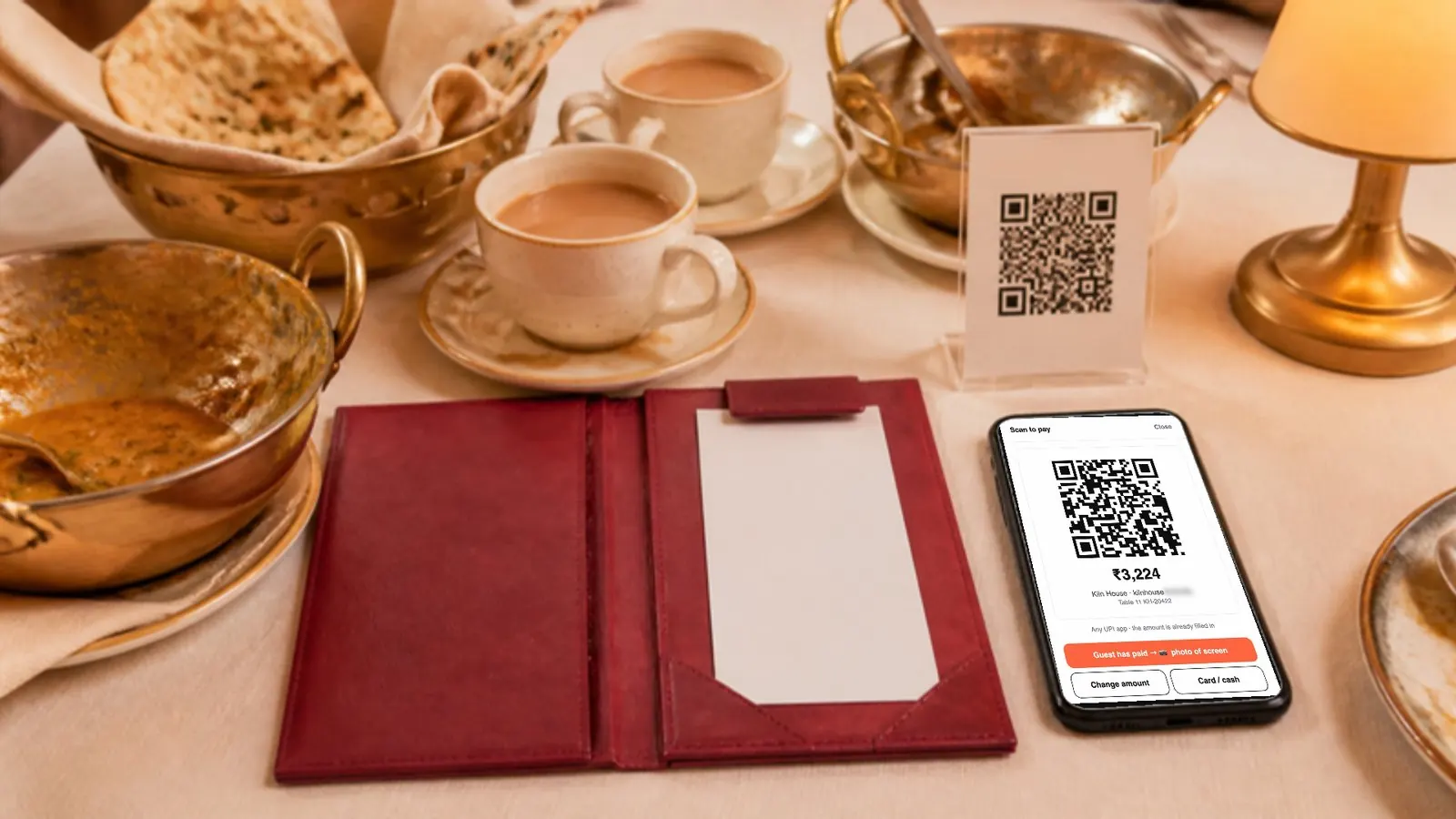
Discounts are part of hospitality: a regular's dessert, a sorry for a slow kitchen. Unrecorded ones are a leak. A ₹3,000 payment against a ₹3,224 bill is easy to wave through on a busy night, and nobody asks who decided the ₹224.
The fix: allow any discount, but ask for a reason and a name before the bill closes. Let the owner see the list every evening — not to punish anyone, but so that a discount stays a decision rather than a habit.
Bills that are never closed
A table leaves, the bill stays open, and the next morning nobody remembers what happened. Parties are the worst for this: a forty-guest buffet ends at five, the advance was taken weeks ago, and the final settlement slides to “tomorrow”.
The fix: at the end of every service, compare tables seated with bills closed. Any gap gets a name next to it before anyone goes home. For parties, settle the balance against the advance on the day, not later.
A checklist for every service
Print this and keep it at the counter. None of it needs software — only a routine that everyone follows.
- Before service: every table QR shows your business name.
- At every bill: read the grand total and the amount paid aloud; close only when they match.
- Write the UTR of every UPI payment next to the bill number.
- Refuse any UTR that is already in the register.
- Check the payee on every screenshot — your business, not a person.
- Card payments: match the slip to the bill, and keep the slip.
- Every discount or complimentary item: a reason and a name, before the bill closes.
- End of service: tables seated against bills closed — explain every gap.
- Parties: settle the balance against the advance on the day.
- Next morning: the owner reads the discount list and every bill that didn't add up.
Doing it by hand, honestly
This checklist works. It also asks a lot of a tired team at eleven at night. The UTR register gets skipped when three tables pay at once. The payee check is the first thing to go when the steward is new. Most leaks don't happen because people don't know the rule — they happen on the nights the rule is hardest to follow.
That is why the check has to happen at the table, in a few seconds, and the same way every time.
How Nowish does it
When a guest shows a payment screenshot, staff just take a photo. AI reads the amount, the UTR and who was paid — and checks each one against the bill before the table is closed.
The same UTR shown again on another table is refused — one payment can't settle two bills. If the screenshot shows someone else's UPI ID, staff must give a reason before the table closes, and the owner is alerted. And when ₹3,000 arrives against a ₹3,224 bill, settle won't close until staff pick a reason.
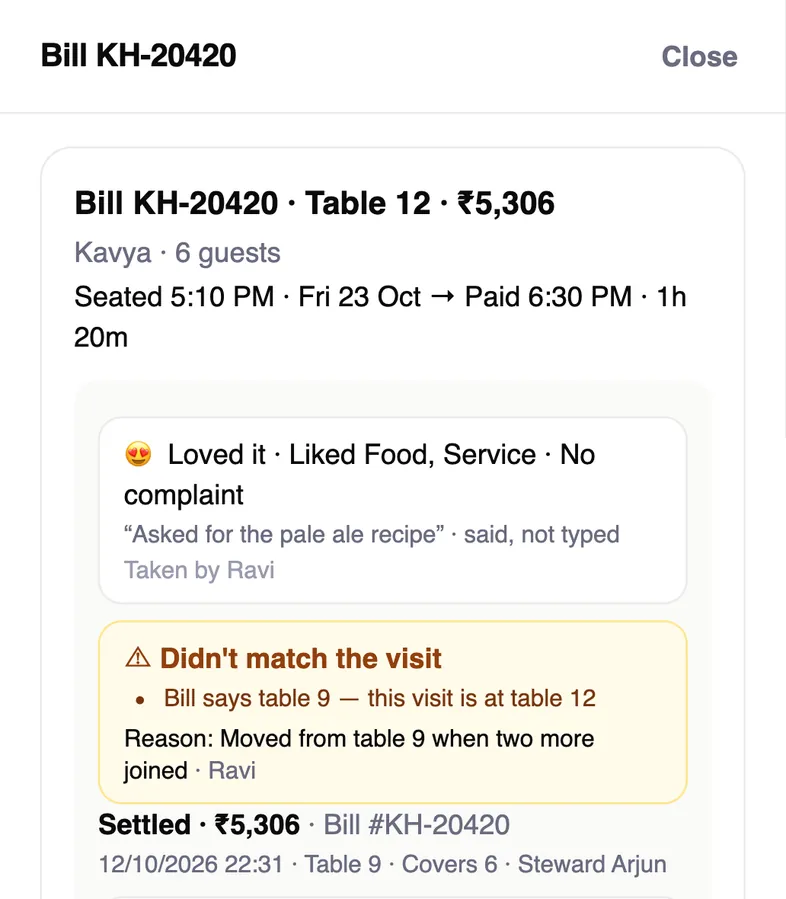
It also checks card slips and app payments, and the restaurant's own UPI QR fills in the exact amount. Every change is recorded, with who made it.
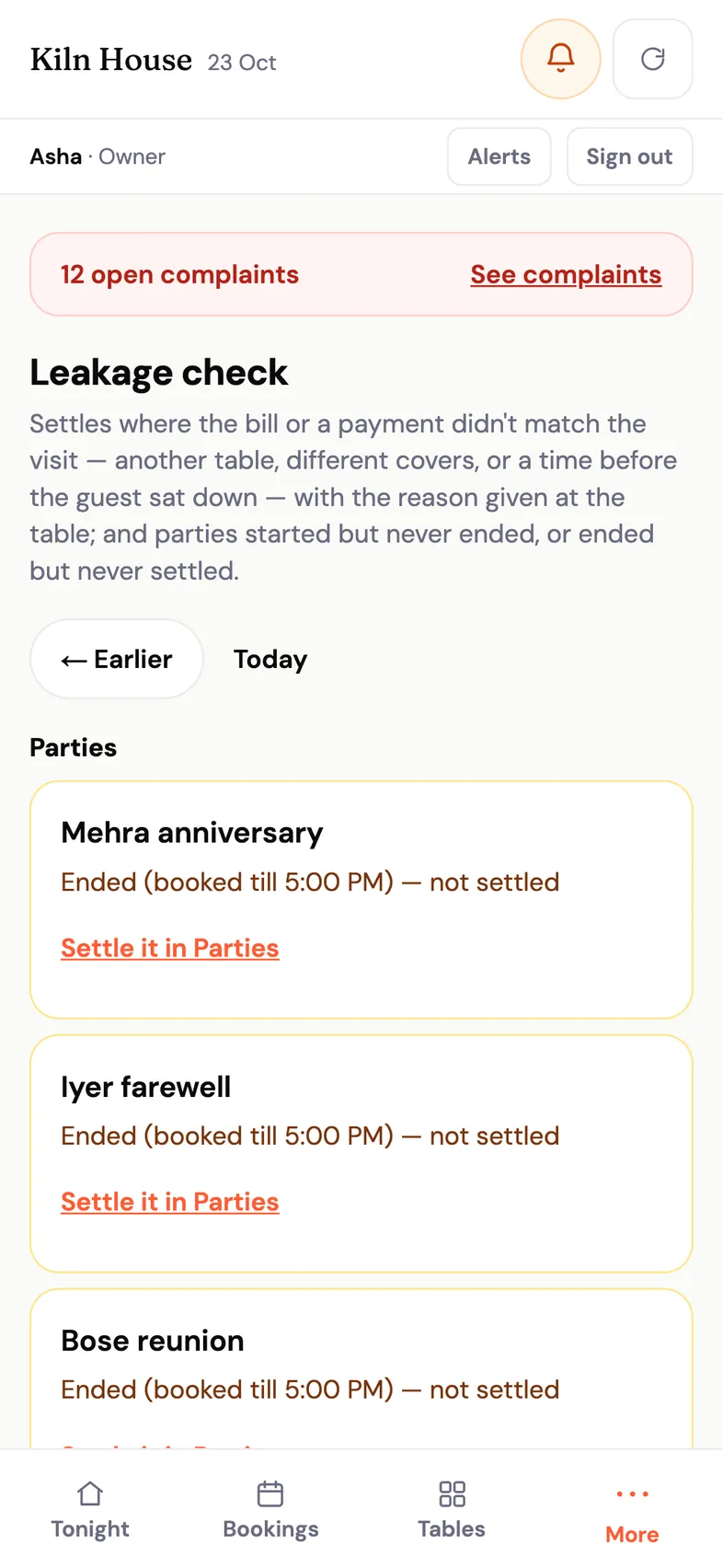
None of these fixes needs extra staff. They need a check that happens every time, at the table, in a few seconds — which is exactly the part that's hardest to do by hand on a Saturday night.
- Payments
- UPI
- Leakage