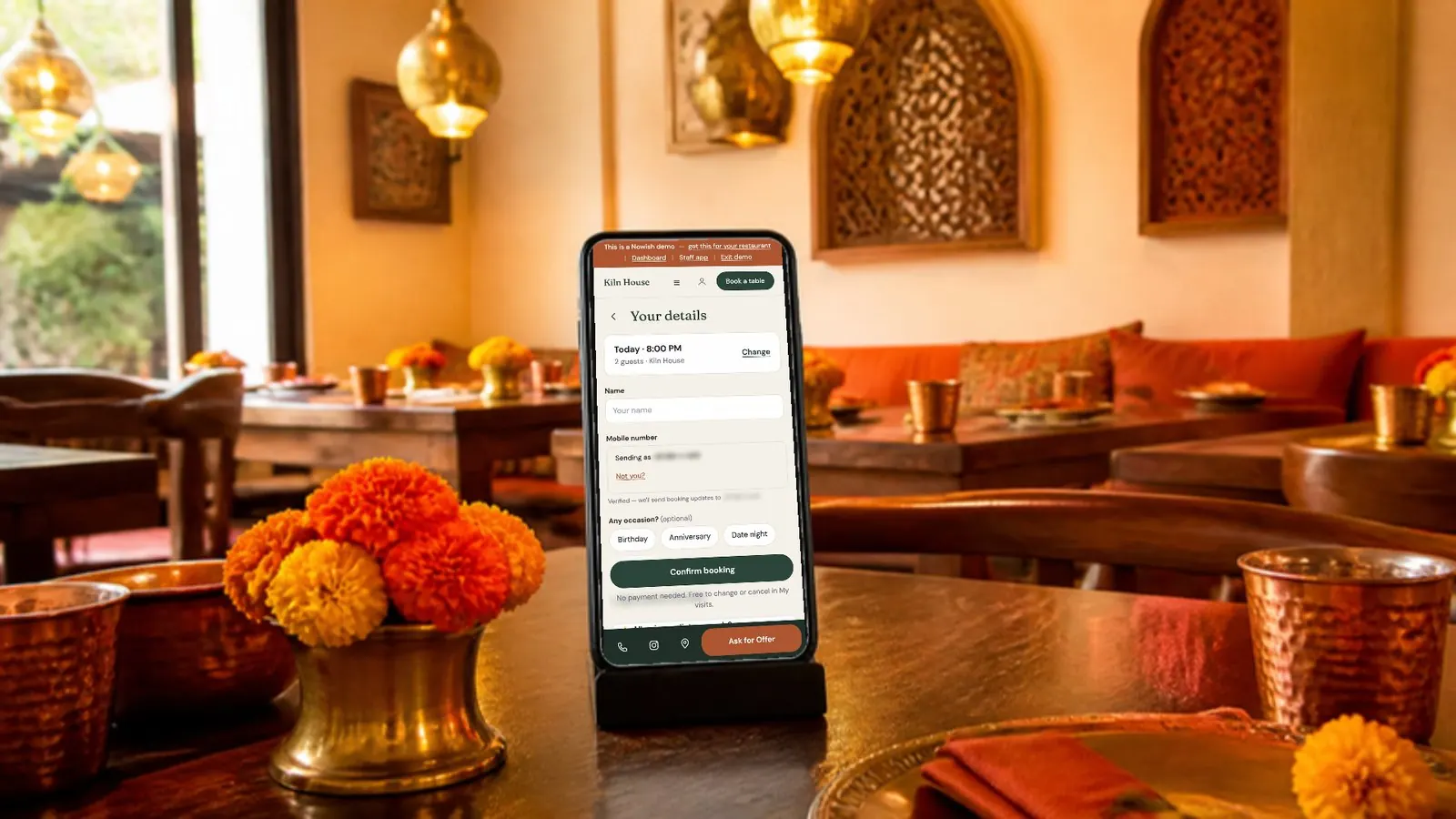
How to stop short deliveries at your kitchen gate
Short deliveries are rarely dramatic. The paper says 2.5 kg, the crate holds less, and the invoice is paid in full a week later.
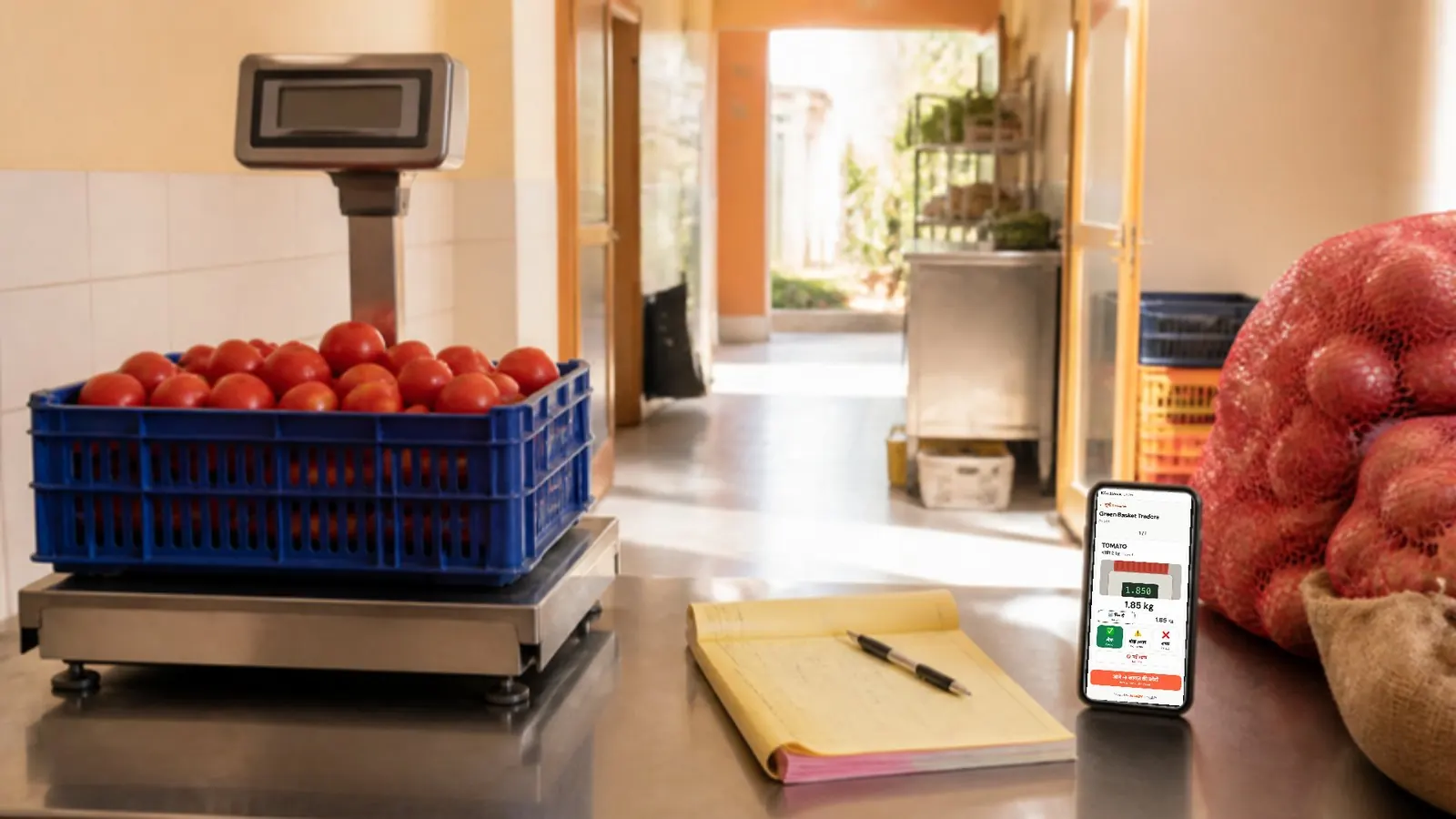
Most kitchens check deliveries by eye. A crate looks full, the challan is signed, and the vendor's tempo has gone before anyone thinks to weigh the paneer. A few hundred grams short on a few items a day is easy to miss — and it is paid for, every time, when the invoice arrives.
Nobody steals a whole crate. The paper says 2.5 kg and the bag holds 2.2. The onions come in a damp sack. The chicken carries a little extra ice. Over a month, across vegetables, dairy, meat and dry stores, it adds up to real money — and it is the easiest leak to stop, because it happens in one place: your back door.
Here is a routine that takes about two minutes per crate, and works whether you run one outlet in Noida or five across the city.
Where the grams go
It helps to know what a short delivery actually looks like, because most of it isn't deliberate.
- Weight on paper, not on the scale. The challan is written from the order, before anything was weighed.
- The crate and the sack. A plastic crate or a wet jute sack can weigh a kilo or more, and it is counted as produce.
- Water and ice. Paneer kept in water, fish and chicken packed in ice, greens sprayed to look fresh — all of it weighs something.
- Quality. Soft tomatoes, sprouting onions or sour curd are “delivered”, but not usable.
- Missing lines. One item of six simply doesn't come, and the invoice lists it anyway.
Mandi rates in Delhi NCR move every day, so a vendor's price is hard to argue with. The weight and the quality are not — as long as you check them at the gate.
A routine for every delivery
Weigh every crate, not a sample
Weighing one crate in five tells the vendor which four nobody looks at. The short one is never the one that gets weighed.
The fix: keep a platform scale at the back door and weigh every item before the challan is signed. Take the empty crate's weight off. If it isn't weighed, it isn't received.
Photograph the challan before the vendor leaves
A signed challan in a drawer is hard to find on the day the invoice is disputed. A paper that went missing can't be argued with at all.
The fix: take a photo of the challan at the gate, beside what the scale says. The paper and the weight, together, are the record — dated, and on a phone, not in a drawer.
Check quality at the gate, not in the kitchen
Once a crate is in the cold room, a soft tomato is the kitchen's problem. At the gate, it is still the vendor's.
The fix: open the crate before it comes in. Anything turned back goes back with the vendor, with a note of why — and the note goes to whoever pays the invoice.
If the paper says 2.5 kg and the scale says 1.85 kg, the invoice should say 1.85 kg.
Pay the invoice against what arrived
The invoice is often written from the order, not from the crate, and it arrives days later. Unless someone puts the two side by side, the order is what gets paid.
The fix: before an invoice is paid, match it line by line to what was weighed at the gate. Short items are paid for what came in; missing items aren't paid at all.
Make it the same routine for every vendor
The person on the gate at six in the morning changes from week to week, and often reads Hindi more easily than English. A routine that lives in one person's head leaves with them.
The fix: the same steps for every delivery — weigh, photograph, check, then sign — written in the language your gate team reads, so whoever is on the gate does it the same way.
A gate checklist you can print
Stick this by the back door. It works with a scale, a phone and a register — nothing else.
- A platform scale at the back door, checked against a known weight every week.
- Every item weighed, with the crate or sack weight taken off.
- Paneer, chicken and fish weighed drained — without the water or ice.
- Every crate opened and checked before it comes in.
- Rejected items go back with the vendor, with a written reason.
- Missing items noted on the challan before it is signed.
- A dated photo of the signed challan.
- The invoice matched line by line to what was received, before payment.
- Short or missing items raised with the vendor the same day.
- The same routine for every vendor and every delivery.
Why it slips
The routine is simple. What breaks it is the morning: three vendors at once, a cook pulled onto the gate, a challan in English that the person receiving can't easily read, and an invoice that reaches the accounts desk a week later with nothing to compare it to. The weighing happens; the record of it doesn't.
How Nowish does it
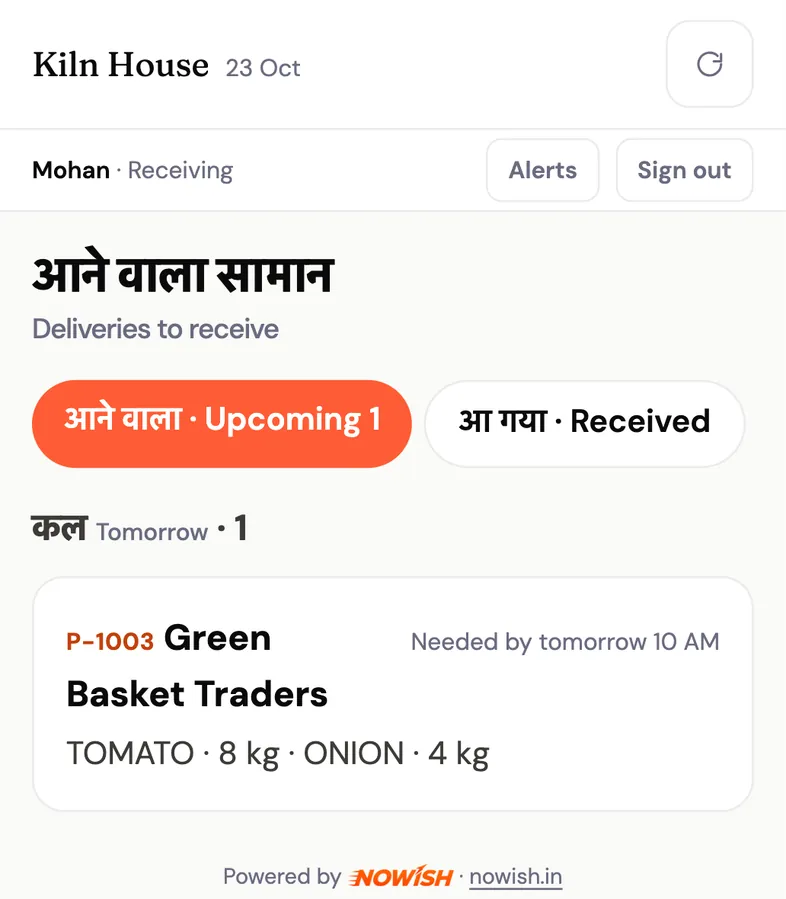
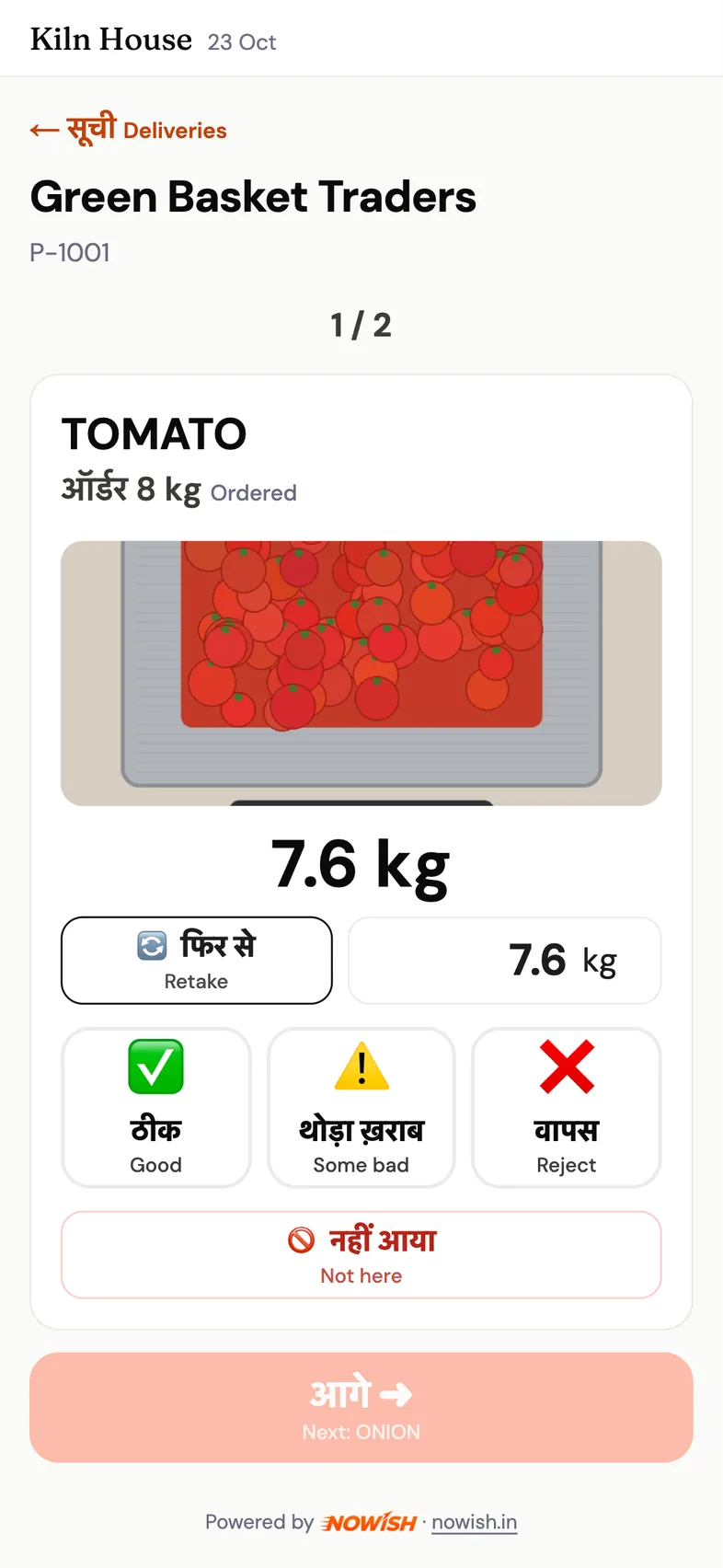
The chef asks for supplies. The store approves and sends the order to the vendor on WhatsApp. The gate weighs every crate and photographs the challan — in Hindi, with big buttons, and no prices.
When the paper says 2.5 kg and the scale says 1.85 kg, the store is alerted. Then the invoice is checked against what actually arrived — so you pay only for what comes through the gate.
None of this needs a new supplier or a bigger store. It needs the weighing to happen every time, before the signature — which is the part that is easiest to skip when three vendors arrive at once.
- Purchases
- Receiving
- Vendors